Product Name: Anticoagulant (ACD/Sodium Citrate) + GEL Vacuum Blood Collection Tube
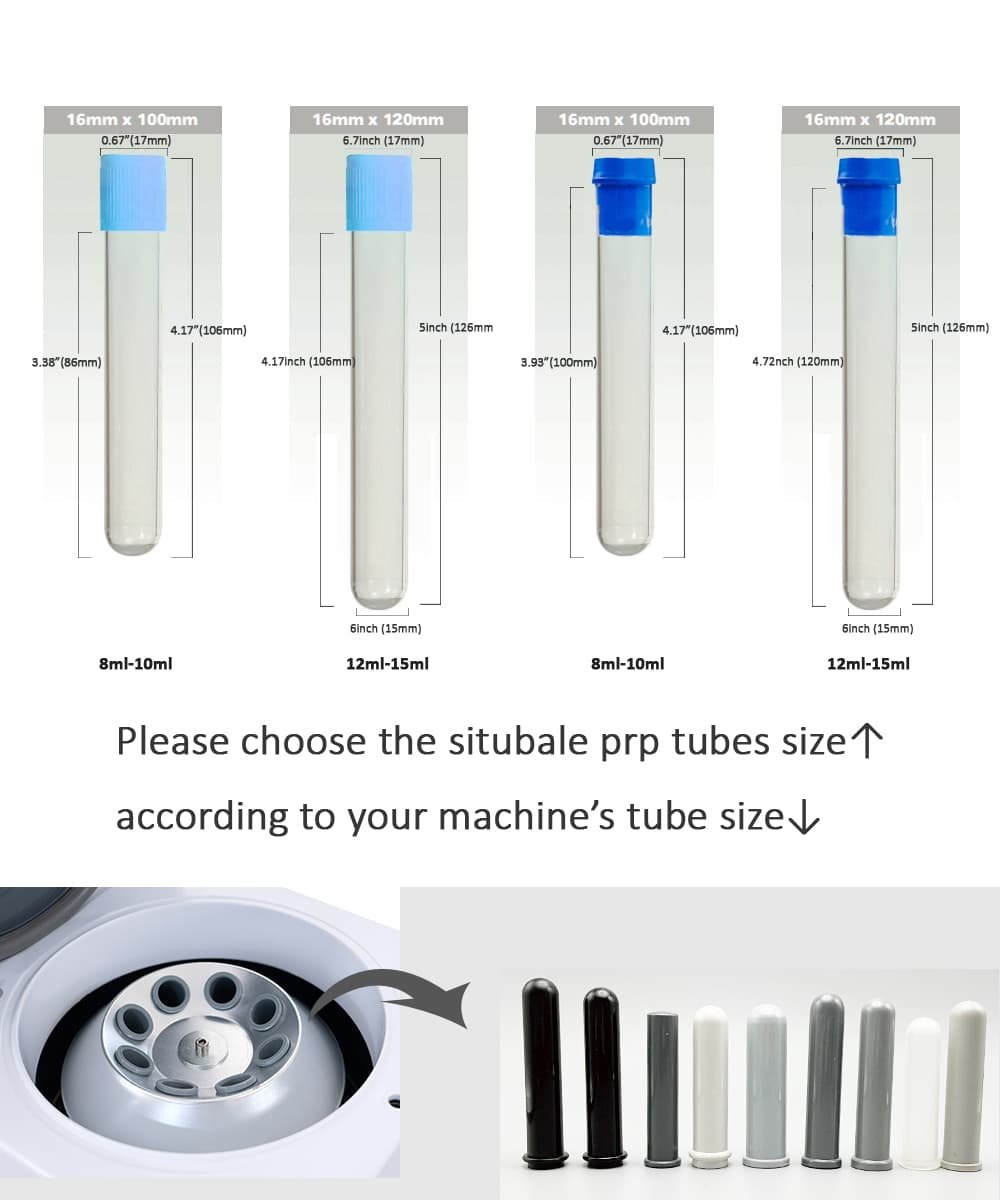
Draw Volume | Material | Dimensions | Cap |
8ml-10ml | Glass / PET | 16mm × 100mm | Ruber / Plastic |
12ml-15ml | Glass / PET | 16mm × 120mm | Ruber / Plastic |
 2. Product Composition
Consists of a tube, a butyl rubber stopper, a safety cap, and either ACD solution or Sodium Citrate solution with an additive (separating gel). It is pre-vacuum processed to achieve automatic quantitative collection.
· Raw materials are produced in a 100,000-class clean room.
· Final PRP tubes irradiated sterilization after production.
· ACD Solution: 150 mg/ml
· Sodium Citrate Solution: 100 mg/ml
· Biotin: 20 mg/ml
· HA: 20 mg/ml
· Carefully check the tube. Do not use if any of the following:
· Tube broke
· Crystallization of the internal solution
· Visible cracks or damage on the cap
· Expired
· Face: Recommended to use 0.9% physiological saline. Iodophor is not recommended.
· Legs or Other Areas: Iodophor can be used.
· Use 21g or 23g butterfly blood collection needle (with a holder):
· Position the needle tip close to the inner wall of the tube, allowing blood to flow down the side slowly.
· Important: Do not direct the needle vertically towards the bottom of the tube, as the vacuum force can cause rapid blood entry, leading to hemolysis.
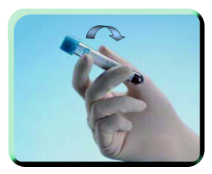
· Gently invert the PRP tube 7-8 tims
· Avoid vigorous shaking to prevent rupture of blood cells and subsequent hemolysis
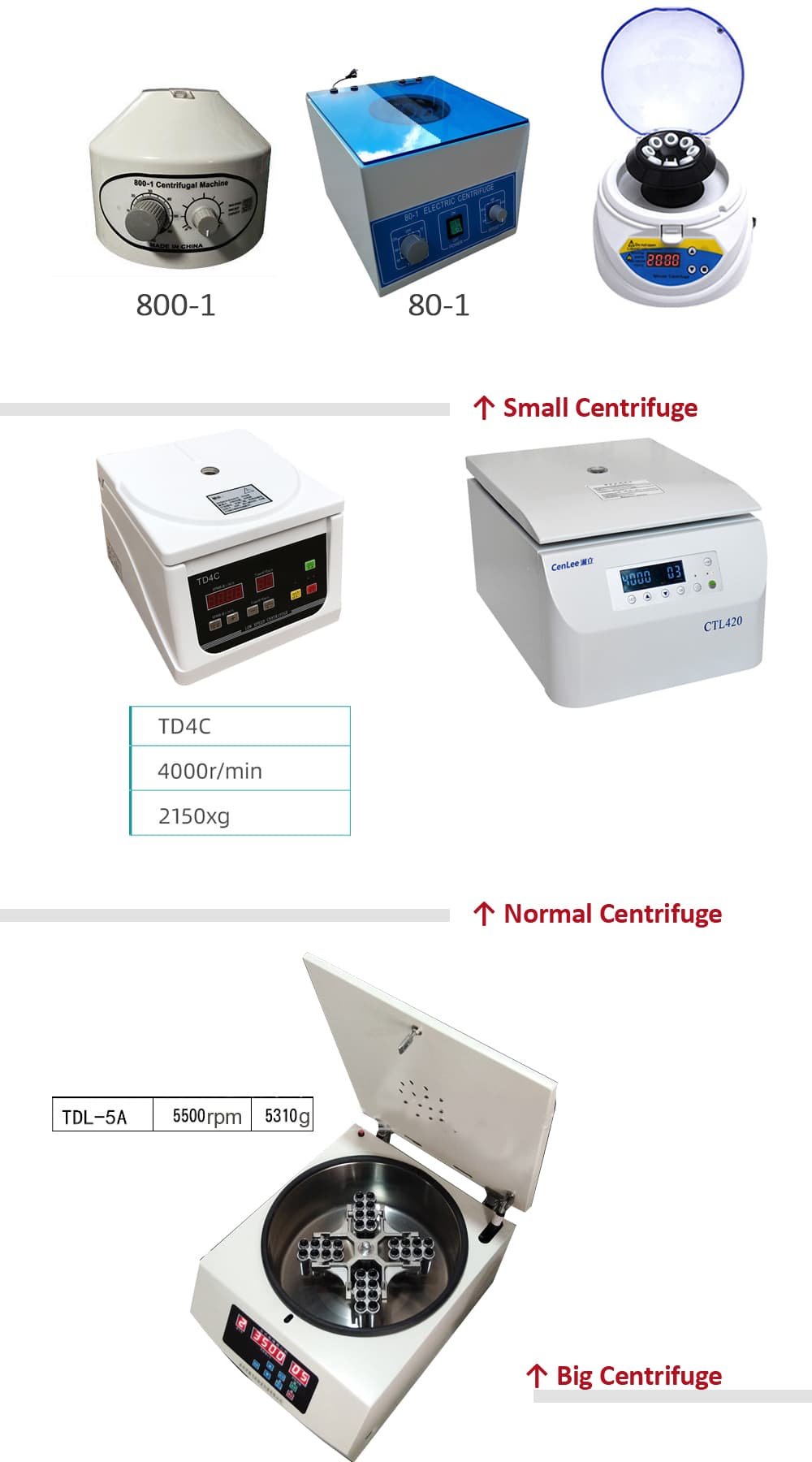
Centrifuge Type | Example Models | Recommended Parameters | Centrifugation Time |
Small Centrifuge | 800-1, 80-1 | Max Speed 4000rpm (~1600-1700g) | 12-15 mins |
Standard Centrifuge | TD4C, TD4, CTL420 | Max Speed 4000rpm (~2200-2700g) | 8-10 mins |
Large Centrifuge | TDL-5A | Approx. 3000 rpm | 8-10 mins |
RCF (g) = 1.118 × 10⁻⁵ × n² × r
The required Relative Centrifugal Force (RCF) for the PRP tube is approximately 2600g - 3000g.
Centrifuge Type | Recommended Speed | Centrifugation Time |
Small Centrifuge | 3500 rpm (~1200-1500g) | 10 minutes |
Medium Standard Centrifuge | 3000 rpm (~1200-1500g) | 8-10 minutes |
Large Centrifuge | Not Recommended | - |
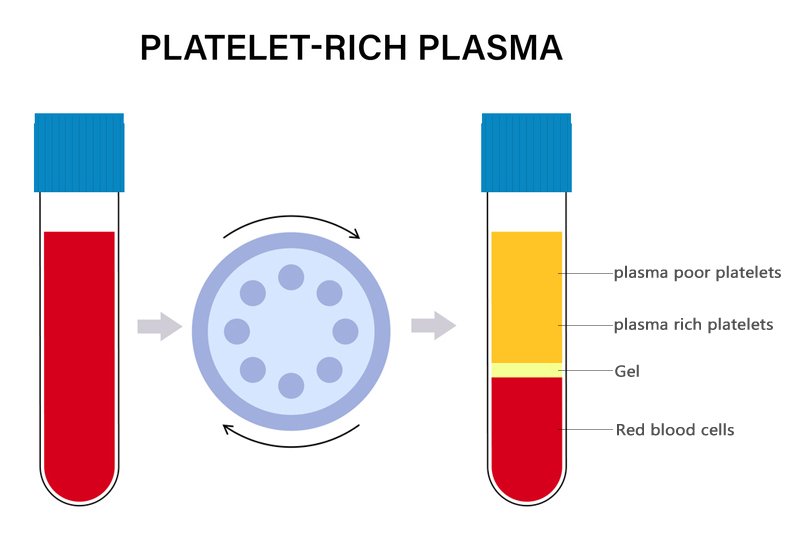
· After centrifugation, the blood will separate into three distinct layers. From top to bottom, the layers are:
· PPP (Platelet-Poor Plasma)
· PRP (Platelet-Rich Plasma)
· Separating Gel
· Red Blood Cell
The layer close to the separating gel is the PRP. The concentration of platelets is highest closest to the gel barrier.
· At the end of blood collection, first remove the vacuum tube, then release the tourniquet, and finally withdraw the venipuncture needle. This sequence minimizes the risk of blood reflux.
· Do not invert the tube during blood collection. Inversion can cause the part of the needle inside the tube to contact the collected blood, creating a connected state and potentially leading to blood reflux.
· Do Not Use If Damaged: Do not use tubes that are cracked, have loose caps, show signs of additive deterioration, or are used with incorrect accessories.
· Intended Use: Important Note: The Platelet-Rich Plasma separated by this device is intended solely for wound repair and must NOT be used for intravenous injection.
· Temperature & Humidity: Store at room temperature 2°C - 30°C (Optimal storage temperature 2°C - 8°C). The relative humidity of the environment should not exceed 80%. Improper transportation and storage can affect the vacuum and the efficacy of the additives.
· Do not store in direct sunlight or in environments with temperatures exceeding 40°C.
· Shelf Life: Under normal transportation and storage conditions, the theoretical shelf life is 2 years. However, it is recommended to use the tubes within 1.5 years for optimal performance.